You tap your phone, feel a crisp little click, and think nothing of it. But that tiny sensation is the product of some genuinely clever engineering — and understanding how it works explains why some devices feel premium and others feel like a buzzing pager from 2003.
Haptic feedback is the umbrella term for technology that communicates information through the sense of touch. In consumer electronics, it shows up in smartphones, game controllers, smartwatches, and increasingly in laptop trackpads. The goal is always the same: make a digital interaction feel physical, even when there's nothing physically moving in the traditional sense.
The oldest and simplest approach is the eccentric rotating mass motor, or ERM. This is exactly what it sounds like — a small motor with an unbalanced weight attached to its shaft. When the motor spins, the weight creates centrifugal force that rocks the whole unit, producing vibration. ERMs are cheap and reliable, which is why they ended up in so many early mobile phones. The downside is that they respond slowly, can't easily vary the character of the buzz, and produce a fairly crude, one-dimensional rumble.
The more capable successor is the linear resonant actuator, or LRA. Instead of spinning, an LRA uses an electromagnetic coil to drive a small weighted mass back and forth along a single axis, like a tiny speaker without a cone. Because the movement is linear rather than rotational, the system responds much faster — often in under ten milliseconds — and the intensity, duration, and even the texture of the feedback can be precisely controlled by adjusting the electrical signal. This is how modern flagship smartphones produce effects that genuinely feel like distinct button clicks, subtle taps, or gentle pulses, all from the same hardware.
Game controllers take a different path. Traditional rumble motors are ERMs scaled up, but more recent controllers use a pair of LRAs with different resonant frequencies — one for each hand grip — allowing the device to deliver nuanced directional feedback. When a weapon fires on the left side of the screen, the left grip responds differently from the right. That asymmetry is deliberate, and it adds a spatial dimension that flat vibration simply cannot.
At the high end, piezoelectric actuators use crystals that physically deform when voltage is applied. They respond almost instantaneously, consume very little power, and can be made extremely thin, which is why they appear in precision trackpads. The sensation they produce is sharp enough that a glass surface with a piezo layer underneath can convincingly simulate a mechanical click — even though the glass never actually moves.
The gap between these technologies is exactly why two devices with 'haptic feedback' can feel worlds apart. Hardware matters, but so does software — the waveforms, timing, and context in which feedback fires all shape the final experience as much as the actuator itself. As wearables and extended-reality devices push haptics into new territory, that combination of physics and software craft is only going to get more interesting to watch.
Gadgets & Accessories
How Haptic Feedback Actually Works — And Why It's More Complicated Than a Simple Vibration
October 5, 2026
Related in Gadgets & Accessories
Oct 14, 2026
How to Choose a Portable Charger That Actually Fits Your Life: A Practical Checklist
Portable chargers — also called power banks — have become as essential as the devices they keep aliv…
Read More →
Oct 13, 2026
What Is a Smart Display — And Do You Actually Need One on Your Desk?
Smart speakers were just the beginning. Over the past several years, a different kind of device has …
Read More →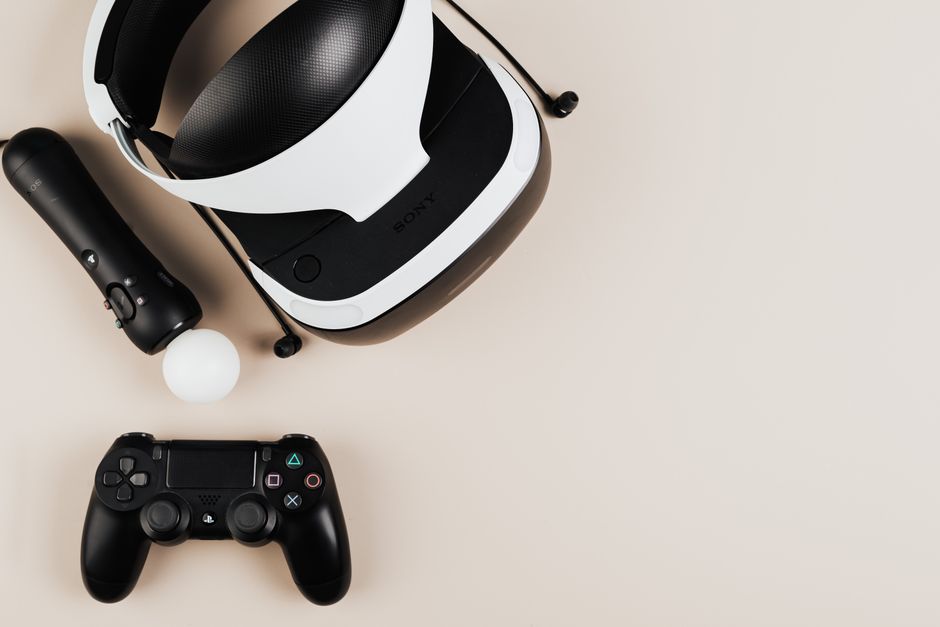
Oct 8, 2026
Mechanical vs. Membrane vs. Optical Keyboards: Which Switch Type Actually Fits the Way You Type?
Your keyboard is the thing your hands touch more than almost any other object in your life. Yet most…
Read More →